
The short answer: the best online math course for you isn’t the flashiest or the cheapest — it’s the one that matches how the student learns, covers the exact material they need, and includes real instruction, practice, and support rather than just a pile of videos. To choose well, judge every option against seven things: teaching quality, curriculum fit, learning format, assessment and feedback, support access, honest total cost, and a free preview. Get those right and the price takes care of itself. Skip them and even a “great” course can be money wasted.
This is a buyer’s checklist, not a sales pitch. Whether you land on our courses or someone else’s, these are the criteria that actually predict whether an online math course works — so you can decide with confidence instead of guessing.
Most people start course-shopping by asking “which one is the best?” That’s the wrong question, because there is no single best online math course — there’s the best one for a specific student, subject, and situation. A course that transforms one kid’s relationship with algebra can bore another to tears. A platform perfect for a self-directed adult learner can overwhelm a struggling ninth-grader.
So before you compare a single option, get clear on three things:
Every criterion below only means something once you’ve answered those. With that framing set, here’s what to actually evaluate.
This is the single most important factor and the one people underweight. Math isn’t hard because the concepts are impossible; it’s hard when it’s explained poorly. The right instructor makes a confusing topic feel obvious, and the wrong one makes an easy topic feel like a foreign language.
So look past the platform and at the teacher. Is instruction delivered by an experienced educator with a clear, patient style, or is it faceless, auto-generated content? Can you tell who’s teaching and what their background is? A course built around a real, veteran instructor who explains the why — not just the steps — is worth far more than a slick interface with weak teaching underneath. This is exactly why the free-preview step (criterion 7) matters so much: you can often judge teaching quality in about ten minutes.
A course only helps if it covers the right material at the right level. Check three things. Does it teach the specific subject you need — not “math” in the abstract, but the actual course (Prealgebra, Geometry, Calculus 2, Statistics)? Does it start where the student is, so they’re neither lost nor bored? And is the sequence complete, or does it have gaps that will leave the student stranded halfway through?
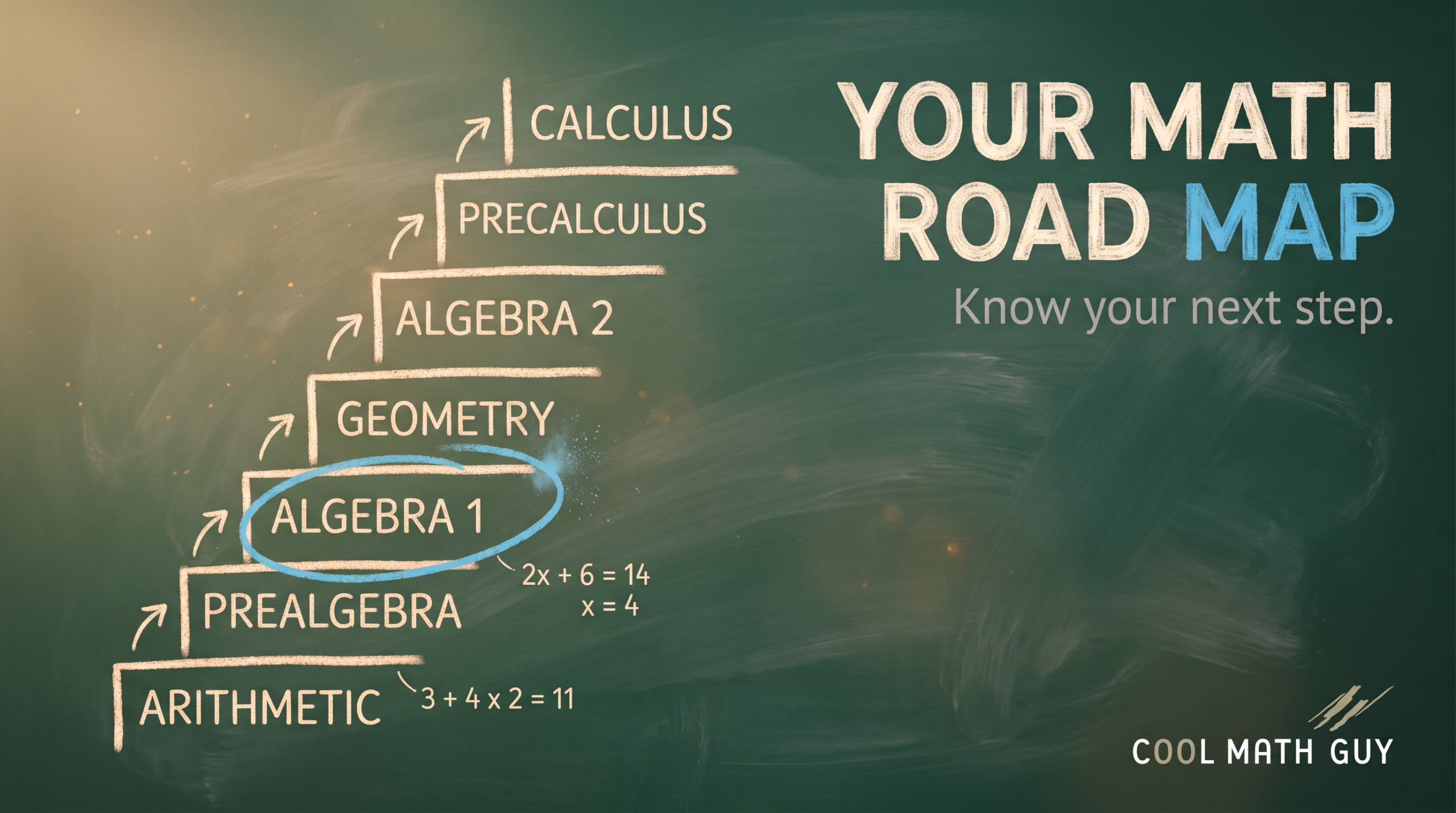
For homeschool families especially, curriculum fit also means alignment: does the course map to recognizable standards and common textbooks, so it counts and transfers cleanly? A provider with a full, connected catalog — one where a student can move from arithmetic all the way up through calculus without switching platforms — spares you the pain of stitching together mismatched programs.
Online math courses generally lean one of two ways: video-based instruction, where you watch an educator teach and then practice, or interactive/adaptive platforms, where you work problems and the software responds with instant feedback and gamified progress. Neither is universally better — they suit different learners.
Video-based courses shine for students who need concepts explained clearly and who benefit from pausing, rewinding, and rewatching until it clicks. Interactive platforms can suit younger learners or those who stay engaged through constant click-and-check feedback. Be honest about which describes your learner. (This is a genuine fit question — if a student truly needs gamified, automated interactivity to stay engaged, a video-first course may not be the right call, and that’s worth knowing before you buy.) We cover this trade-off in depth in our guide to self-paced versus live online math classes, which is a related but separate decision about scheduling.
A course without a way to measure progress is just entertainment. Look for practice problems, quizzes, chapter tests, and answer keys — the tools that tell you whether the student is actually learning or just watching. For a homeschool parent, graded assessments with keys are essential, because they turn “I think it’s going okay” into evidence you can act on.
Watch for a common trap here: some platforms offer polished video content but skimp on real assessment, which leaves you unable to verify understanding until a test somewhere else exposes the gap. A complete course pairs instruction with the means to check it.
Every math student hits a wall eventually. What the course offers at that moment separates a real course from a well-organized video library. Can the student ask a question and reach an actual person — ideally the instructor? Is there some form of tutoring or Q&A built in? Or are they on their own the moment they’re confused?
For self-directed adult learners, thin support may be fine. For a struggling student or a homeschool family without a math background at home, instructor access can be the difference between finishing the course and quietly abandoning it in month two.
Notice this is sixth, not first. Price only means something once you know what’s included — and comparing headline numbers without comparing contents is how people waste money. A cheaper course that’s video-only can cost more in the end than a pricier one that includes assessments, materials, and support, because the cheap one leaves gaps you’ll pay to fill elsewhere.
Compare on value, not sticker price. Ask what the fee actually includes: Just videos? Tests and answer keys? Instructor access? How long does access last — a month, a year, forever? Are there recurring subscription charges, or is it a flat one-time cost? Understanding total cost of ownership is a distinct exercise from raw price-shopping, which we cover in our posts on affordable online math courses and free versus paid math help. The point of this criterion isn’t to find the lowest number — it’s to make sure the number you pay buys a complete course.
For reference, complete video courses with materials and support commonly run in the range of $150 for a year of access, while some subscription platforms charge under $20 per month and premium ones run $200 or more per course — and what’s inside those prices varies enormously. Always read the inclusions, not just the number.
Never buy an online math course without sampling the teaching first. Almost any reputable provider offers free sample lessons, and ten minutes of watching tells you more than any feature list. Sit the student in front of a sample and watch them: Do they follow the explanation? Does the instructor’s style click? Are they engaged or checked out? If a course won’t let you preview the actual teaching before paying, treat that as a warning sign.
Here’s how to use all seven without getting overwhelmed. Start by narrowing to the courses that clear criterion 2 — they cover the subject and level you actually need. Then use the free preview (7) to judge teaching quality (1) and format fit (3) with the real learner. For your top one or two finalists, confirm the practical layer: assessment (4), support (5), and honest total cost (6). That sequence keeps you from falling for a beautiful interface that teaches poorly, or a rock-bottom price that turns out to be video-only.
If you’re evaluating our own catalog against this list, we’d rather you do it with clear eyes than take our word for it. The Cool Math Guy course catalog covers the full sequence from Arithmetic through Calculus 3, Statistics, and Math Study Skills, taught on video by veteran educator Dana Mosely; the homeschool courses include practice tests, chapter tests, and grading keys, plus direct instructor access, for a flat $150 per course with a full year of access and no recurring fees. Free sample lessons are available so you can judge the teaching yourself — which is exactly what criterion 7 says you should do with any provider. Full details are on the pricing page. Where Cool Math Guy fits best is the video-first, explanation-driven learner who wants a real teacher and a complete package; if your student specifically needs a gamified, adaptive, auto-grading environment, weigh that honestly against what a video course offers.
Match the course to the learner, not the marketing. Evaluate teaching quality, curriculum fit and level, learning format (video vs. interactive), assessments, support access, honest total cost, and always try a free preview before buying. The best course is the one that fits your specific student and subject.
Look for a clear, experienced instructor; complete coverage of the exact subject and level you need; practice and graded assessments; a way to get help when stuck; transparent pricing with everything included; and free sample lessons so you can judge the teaching before you pay.
They can be, if the course includes real instruction, practice, assessment, and support from a consistent source. A video-only course with no way to check understanding or get help may not justify its price over free resources. Value comes from the complete package, not the sticker price.
Neither is universally better. Video-based courses suit learners who need concepts explained clearly and benefit from rewatching. Interactive platforms can suit those who stay engaged through instant, gamified feedback. Choose based on how the specific student learns best.
It varies widely — from under $20 per month for some subscriptions to $200 or more per course for premium platforms, with complete video courses often around $150 for a year. What matters is what’s included: instruction, materials, assessments, and support. Compare value, not just price.
Yes — most reputable providers offer free sample lessons. You should always preview the actual teaching before buying, since ten minutes of watching reveals whether the instructor’s style clicks with the learner far better than any feature list.
Choosing an online math course isn’t about finding the “best” one — it’s about matching the right course to your specific learner, subject, and learning style, then verifying it delivers real teaching, practice, and support. Run every option through the same seven criteria, preview the teaching before you pay, and judge on value rather than sticker price. Do that, and you won’t just avoid wasting money on the wrong course — you’ll pick one the student actually finishes, and actually learns from. That’s the only definition of “best” that matters.
Want to See What Makes
Cool Math Guy Different?
Discover the key features that set Cool Math Guy apart — from self-paced learning to expert support and proven results.
Recent Posts