
The market for online math courses has grown enormously, and prealgebra is one of the most searched entry points. Parents looking for help with a struggling middle schooler, homeschool families building a complete curriculum, and students who need to fill gaps before algebra — they’re all searching for the same thing. What they find varies widely in quality, and the difference between a course that builds genuine understanding and one that produces temporary test performance is significant enough to affect a student’s math trajectory for years.
What makes an online prealgebra course actually worth the investment isn’t the platform, the graphics, or the number of practice problems in the library. It’s the quality of the instruction — whether it explains the reasoning behind each concept or just demonstrates the steps, whether it gives students enough time to absorb each idea before moving to the next, and whether it builds the kind of understanding that transfers to algebra rather than evaporating after the final review session.
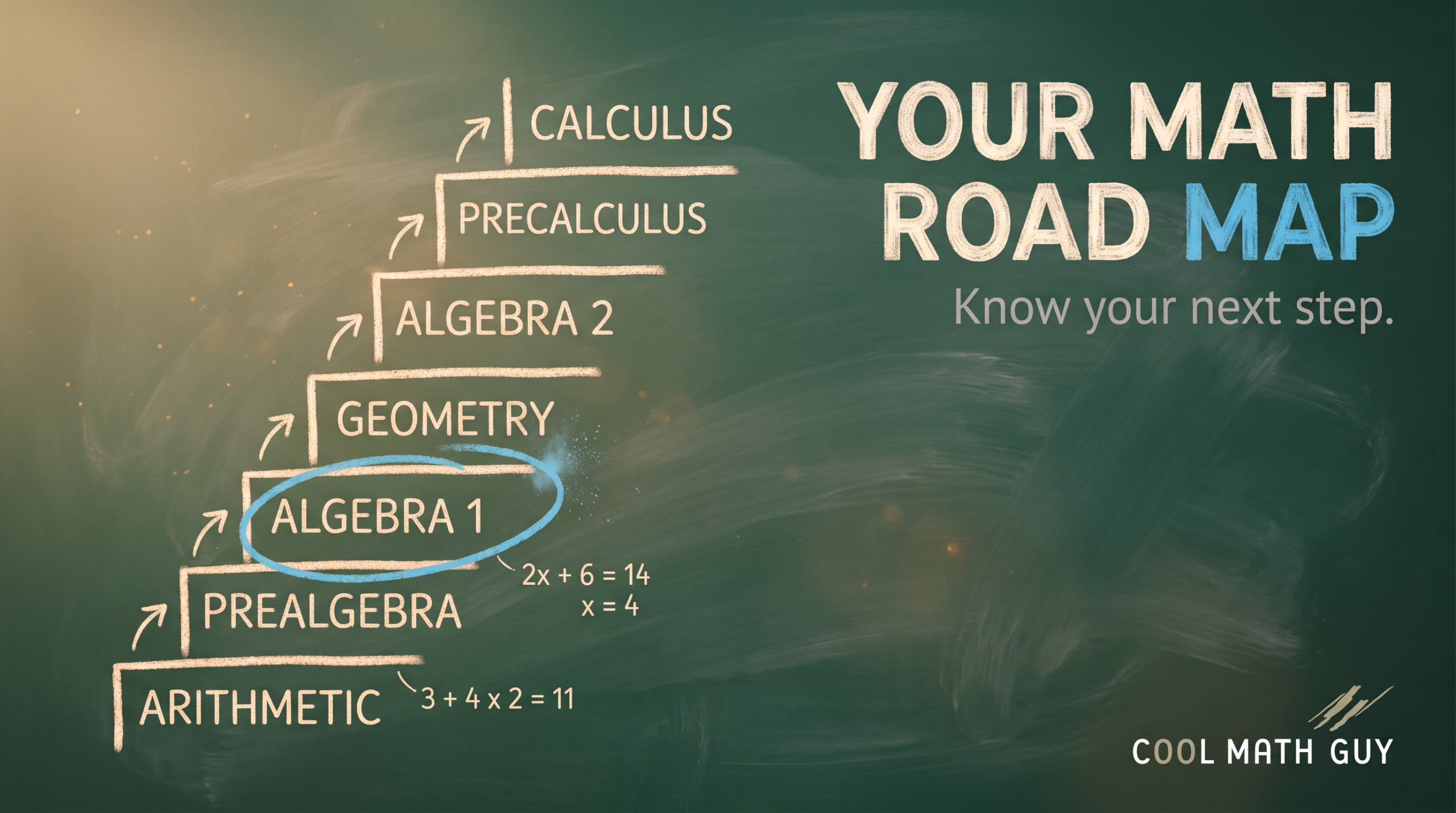
Before evaluating any course, it helps to know what prealgebra is actually supposed to accomplish. The course sits between arithmetic and algebra, and its job is to make that transition deliberately — building the conceptual skills that algebra requires rather than just introducing algebraic notation and hoping it sticks.
A complete prealgebra curriculum covers:
That’s a meaningful amount of content, and each topic in that list connects to something in algebra or beyond.
A course that skims any of these areas — that gets fractions functional without getting them understood, or that introduces variables without explaining what they represent and why they’re useful — is creating the same kind of gap that causes students to struggle later. The question to ask about any prealgebra course isn’t whether it covers the topics. It’s whether it teaches them in a way that builds lasting understanding.
There’s a version of online math instruction that amounts to a digital textbook — written explanations, worked examples, practice problems, and automated grading. Some students can learn from that format. Most prealgebra students cannot, because prealgebra is the first course where mathematical reasoning is genuinely required, and reasoning is harder to build from text alone than from watching someone think through a problem out loud.
Video instruction changes that dynamic when it’s done well. Seeing an instructor work through a problem while explaining each step — not just writing it on the board but narrating the reasoning, flagging the common errors, and showing what the concept looks like from multiple angles — creates a learning experience closer to having a knowledgeable tutor in the room than anything a static curriculum can offer. For prealgebra specifically, where a student is encountering abstract thinking for the first time, that kind of guided reasoning is particularly valuable.
The instructor matters too, in ways that are easy to underestimate. Some math instructors are technically accurate but communicate in a way that feels cold, fast, or intimidating. Others — and Dana Mosely, who teaches Cool Math Guy’s prealgebra course, is a recognized example — have a natural ability to make difficult concepts feel approachable without dumbing them down. The relaxed, conversational teaching style that Dana brought to decades of classroom instruction and the Chalk Dust video programs translates directly to the online format. Students who have felt defeated by math in a traditional classroom often find that a different instructor explaining the same material makes it genuinely accessible for the first time.
Self-paced is a term that appears in the marketing of nearly every online course, but it means different things in different contexts. In some platforms it means you can start any time. In others it means there are no live sessions. In the context of prealgebra instruction, what actually matters is whether a student can move at the speed that produces mastery — not the speed that keeps them on a schedule.
Prealgebra students span a wide range of preparation:
Self-paced instruction that allows a student to rewatch a lesson, spend extra time on a concept without penalty, and move forward only when they’re genuinely ready — rather than when the calendar advances — is the format that produces actual mastery in prealgebra. Because prealgebra content compounds: the student who doesn’t fully understand fractions will struggle with ratios, which will complicate proportions, which will create problems in the algebraic work that follows. Each gap grows if it isn’t caught, and a self-paced course is the most efficient format for catching and closing gaps before they compound.
For homeschool families, this flexibility also means that prealgebra can fit into whatever schedule the family is running, not the other way around. A student can work through a lesson and take time to absorb it before moving to the next one. Parents don’t need to be math instructors themselves — the course handles the instruction — but they can stay engaged with where their student is and how they’re doing without needing to grade anything or build lesson plans from scratch.
Practice problems and quizzes serve a purpose beyond grading. In a well-structured prealgebra course, assessment tells both the student and the parent where understanding is solid and where it needs reinforcement — before those gaps become problems in algebra. A course that provides tests, answer keys, and clear feedback on where errors happened gives a student something to work with. A course that just marks answers right or wrong and moves on doesn’t.
Cool Math Guy’s prealgebra course includes supplemental materials — practice tests, chapter tests, and grading keys — that give homeschool families a complete picture of how a student is progressing. That structure matters particularly for families who are building transcripts, documenting course completion for state requirements, or simply want confidence that their student is actually ready to move into algebra before they do.
The ability to contact Dana directly with questions is another element of the course that functions as a form of assessment — because questions a student or parent asks often reveal exactly where understanding broke down, and a direct answer from the instructor who taught the material is more efficient than searching for an explanation elsewhere.
Cool Math Guy’s Prealgebra course works for several distinct types of learners, and it’s worth being specific about them because the course meets different needs for each.
For a student encountering prealgebra for the first time — a sixth or seventh grader beginning the course in a homeschool setting or using it as a supplement to their school curriculum — the course provides complete, structured instruction from the ground up. It doesn’t assume prior knowledge beyond basic arithmetic, and it moves through the full prealgebra curriculum in a logical sequence that makes each new concept build on what came before.
For a student who took prealgebra in a traditional classroom and came out of it with gaps — a student who passed the course but doesn’t feel confident about fractions, or who is now in algebra and struggling in ways that trace back to prealgebra foundations — the course is an efficient way to identify and close those gaps without repeating an entire grade level. Working through the specific units that need reinforcement on a self-paced timeline is faster and less disruptive than any alternative.
For an adult learner returning to math after years away, prealgebra is often the right starting point — and the self-paced, video-based format accommodates the schedule and learning style of an adult in ways that traditional classroom settings typically don’t.
The course is available at coolmathguy.com/courses/prealgebra-full-course, with pricing options that include the tutoring monthly access tier and the full homeschool annual package depending on what fits the student’s situation best.
For most students, yes — and for some, more so. The research on video-based math instruction consistently shows that the quality of the explanation matters more than the format. A clear, well-paced video lesson that a student can rewatch as many times as needed often produces better retention than a single live classroom explanation, particularly for students who feel too self-conscious to ask questions in a group setting.
The readiness indicator for prealgebra is solid arithmetic — comfortable fluency with multiplication and division, a basic understanding of fractions, and the ability to follow multi-step problems without losing track. If those foundations are shaky, starting with an arithmetic course and moving into prealgebra once those skills are solid will produce better results than pushing directly into prealgebra with gaps. A conversation with Dana via the course’s support structure can help with placement questions.
Yes, and that’s a core part of why it exists. The instruction is handled entirely by the course. A parent’s role is to stay engaged with their student’s progress, encourage consistent work time, and reach out for help when something isn’t clicking — not to teach or re-explain the material themselves.
The homeschool course includes full video instruction, structured assignments, practice tests, chapter tests, and grading keys. It also includes access to Dana’s personal support for questions. It’s designed to be a complete curriculum that doesn’t require supplementing with other materials, though a recommended textbook is paired with the course for practice problems and reference.
By building the specific skills that algebra draws on most directly — fluency with fractions and signed numbers, a genuine understanding of variables and expressions, comfort with the order of operations, and the ability to solve basic equations. A student who completes this prealgebra course with real mastery, rather than just checking the box, will find algebra more intuitive because the foundation it requires is actually there.
That’s a signal to revisit specific units rather than push forward. The self-paced format makes it easy to go back and reinforce topics that didn’t fully solidify without repeating the entire course. Readiness for algebra is more important than timing, and taking the time to confirm that foundation is solid before advancing is always the right call.
Want to See What Makes
Cool Math Guy Different?
Discover the key features that set Cool Math Guy apart — from self-paced learning to expert support and proven results.
Recent Posts