As December winds down, most homeschool families shift gears. Lessons slow, activities pile up, and the holidays take center stage. But before the semester officially wraps up, there’s one powerful way to set your teen up for success next year—an end-of-year math review.
A thoughtful review doesn’t mean redoing old worksheets or rushing through forgotten chapters. It’s about reflection, reinforcement, and small steps that make a big difference come January. Here’s how to design an effective year-end math review for your homeschool teen.
Why a Math Review Matters
Math builds layer upon layer. Gaps left unaddressed can make next semester harder than it needs to be. A quick year-end review helps identify weak spots, refresh key skills, and restore confidence before the new term starts.
You’re not just reviewing content—you’re helping your student rebuild momentum and enter the new year with clarity, not confusion.
Benefits of a December math review:
- Reinforces core concepts that may have faded since summer
- Reveals areas needing extra focus before advancing
- Reduces anxiety about “starting over” in January
- Helps teens take ownership of their learning progress
Think of it as a bridge between semesters—a simple routine that connects where they are to where they’re headed next.
Step 1: Reflect on the Semester
Start with a conversation instead of a quiz. Ask your teen how they feel about math right now—what felt easy, what felt confusing, what they’re proud of. This reflection creates awareness and builds trust, especially if math has been a point of stress.
Some great reflection questions:
- “Which lessons did you enjoy most this semester?”
- “What’s one concept that finally clicked?”
- “Is there a topic that still feels confusing?”
- “What’s one goal you’d like to reach next semester?”
This dialogue frames review as collaboration rather than correction. It helps your teen see that learning is about growth, not perfection.
Step 2: Identify the Core Concepts to Review
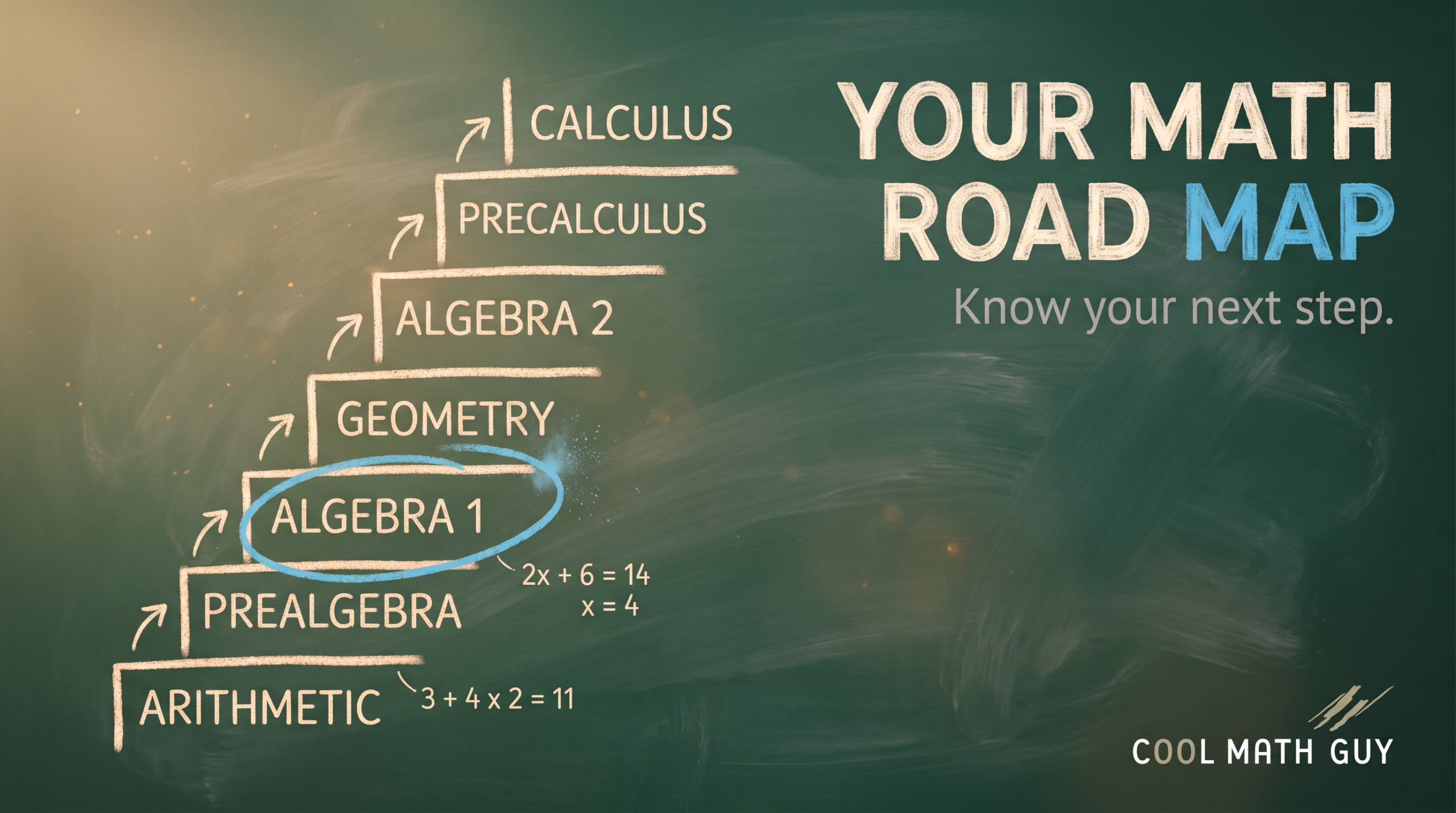
You don’t need to review everything. Focus on foundational topics that support future lessons. For middle and high school homeschoolers, those usually include:
- Arithmetic and fractions (for younger teens)
- Solving equations and inequalities (Algebra 1)
- Graphing and linear relationships (Algebra 1 & 2)
- Geometry basics—angles, triangles, area, and perimeter
- Functions, exponents, and polynomials (Algebra 2 and Precalculus)
If you’re unsure where to start, revisit past quizzes or assignments. Look for recurring mistakes—they often highlight where a little extra review will go a long way.
Structured courses like Cool Math Guy’s Homeschool Math Courses make this process easier with built-in review units and topic-based video refreshers.
Step 3: Create a Simple 2-Week Review Plan
You don’t need to dedicate full school days to math review. Instead, weave in short sessions that keep things light and effective.
Here’s an example 10-day review schedule:
- Day 1: Reflect on strengths and set personal math goals.
- Day 2: Review fractions, decimals, and percent conversions.
- Day 3: Revisit solving for variables and simplifying equations.
- Day 4: Work on graphing practice or coordinate plane review.
- Day 5: Focus on geometry—measuring angles and calculating area.
- Day 6: Quick quiz or self-assessment on everything so far.
- Day 7: Review exponents and radicals.
- Day 8: Practice word problems using real-world scenarios.
- Day 9: Reflect on progress and review remaining weak areas.
- Day 10: Set goals for January and preview next semester’s topics.
The goal isn’t mastery—it’s reactivation. Short, structured refreshers help bring old knowledge to the surface so new lessons can build smoothly on it.
Step 4: Mix Up the Format
Students remember more when review feels different from everyday lessons. Try a mix of:
- Games and challenges: Use math review bingo or timed drills for fun competition.
- Online tools: Use Khan Academy or Desmos to visualize and practice.
- Teaching moments: Let your teen explain concepts back to you. Teaching reinforces mastery.
- Practical activities: Use math in real life—baking conversions, room measurements, or budgeting.
Variety prevents burnout and helps the brain retain information longer. Even ten-minute practice sessions can spark confidence.
Step 5: Review Old Assessments Together
Pull out a few old tests or assignments and go over them without pressure. Ask your teen to explain how they approached each question. Focus less on mistakes and more on strategy—what worked, what didn’t, and why.
This simple exercise strengthens problem-solving habits and reveals how your student thinks through math. It’s also a great way to show growth by comparing early work to more recent performance.
Step 6: Celebrate Progress
Before diving into the holidays, take time to celebrate how much your homeschooler has accomplished this year.
Maybe they mastered long division after months of frustration. Maybe they finally understood graphing or built confidence in Algebra. Those moments deserve recognition.
You might:
- Write a note highlighting their growth.
- Plan a small “Math Celebration Day.”
- Create a chart showing improvement across the semester.
Recognition is powerful—it tells your teen that their effort matters as much as their results.
Step 7: Preview What’s Ahead
Once review feels complete, take a quick look forward. Skim through your upcoming curriculum or course to preview what’s next. This gives your student a mental framework for where they’re headed.
For example:
- If they’re finishing Algebra 1, introduce the concept of functions for next semester.
- If they’re heading into Geometry, discuss how angles and logic connect to real life.
- If they’re starting Algebra 2, review key vocabulary like “polynomial” and “exponent.”
Even a casual preview reduces anxiety and helps your student start the next semester with curiosity instead of hesitation.
Step 8: Keep the Atmosphere Positive
End-of-year reviews can easily slip into self-critique if students feel pressured. Keep the tone light. This is about recognizing progress, not perfection.
Encourage statements like:
- “I didn’t know that before, but now I do.”
- “I can solve these faster than I could a few months ago.”
- “That concept makes sense now that I’ve reviewed it again.”
A positive review season builds confidence—and confident students learn faster when the next semester begins.
Final Thoughts
An end-of-year math review is one of the best investments you can make in your homeschool rhythm. It doesn’t have to be long or stressful. In just a few short sessions, you can refresh your teen’s skills, strengthen their mindset, and prepare them for a smoother, more confident start in January.
The goal isn’t to cover everything—it’s to rebuild connection and momentum. With a little structure, some reflection, and a focus on wins, your student can wrap up the semester proud of their growth and ready for what’s next.
If you want structured lessons that make review and prep easy, explore the full range of Cool Math Guy Homeschool Courses. With guided instruction, clear video lessons, and built-in assessments, they make it simple to refresh and re-engage your teen before the new semester begins.